Seat tube length as a relic
Seat tube measurement described a whole frame back when top tubes were level and steel. On modern sloping frames it tells you almost nothing about where the handlebars will sit.
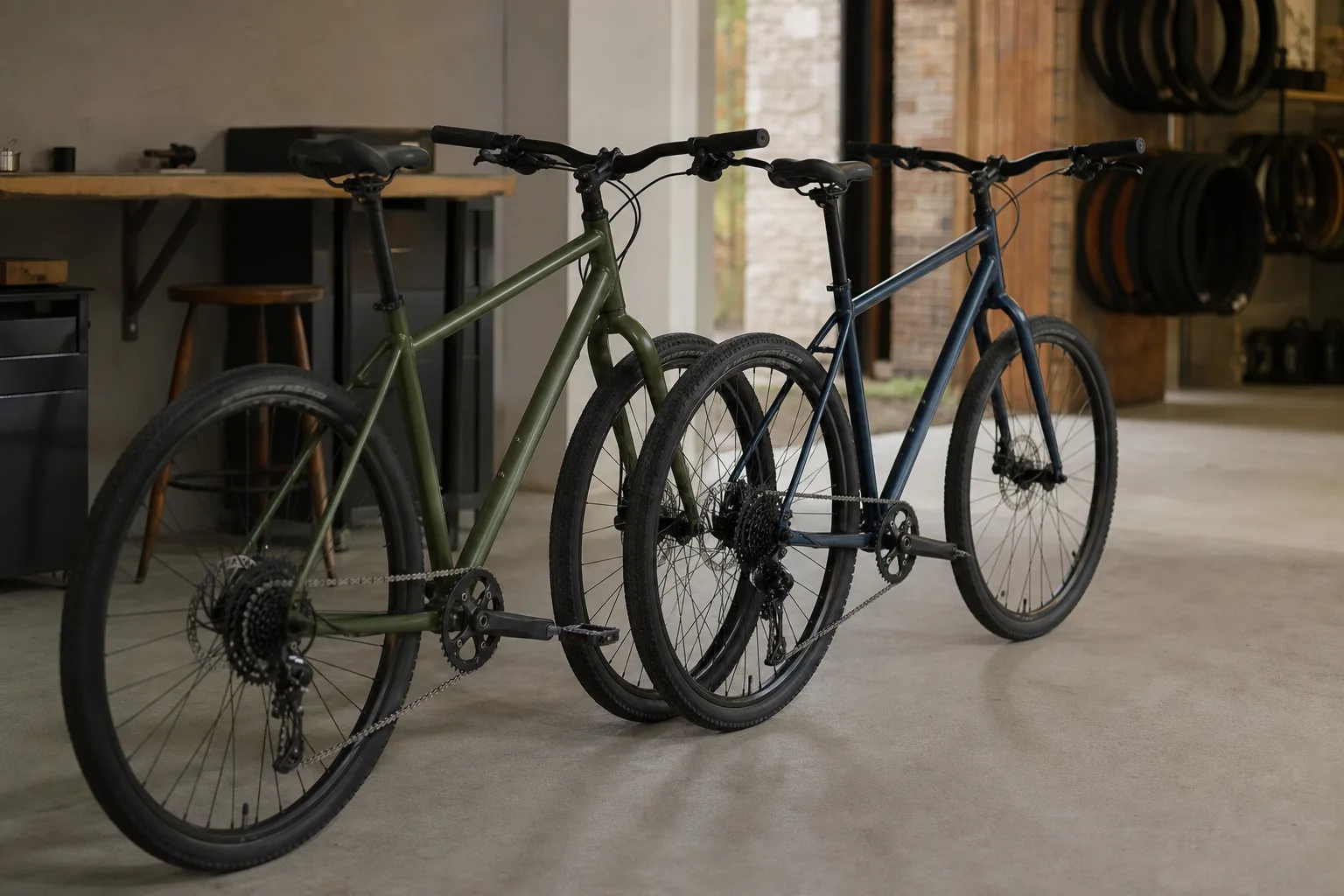
Frame size labels are not standardized, so a careful buyer checks reach, stack, standover with shoes on, and saddle height before spending money.
Frame size letters are a manufacturer's shorthand, not a standard, and two bikes hanging side by side with the same sticker can put your hands eight or nine centimeters apart in space. One brand sizes by seat tube length, a measurement that mattered when frames were level-topped steel and told you something useful about the rest of the geometry. Another sizes by rider height range. A third has simply carried a chart forward from a model it stopped making. The letter is a stocking convenience for the shop. What decides whether the bike suits you is the pair of numbers describing where the handlebars sit relative to the bottom bracket.
Reach is the horizontal distance from the bottom bracket to the top center of the head tube, and stack is the vertical distance to the same point. Together they describe the space you occupy on the bike, and unlike seat tube length they survive comparison across brands. A medium hybrid with 390mm of reach and 620mm of stack is an upright, short-cockpit bike. A medium flat-bar road bike with 400mm of reach and 570mm of stack asks for more forward lean and more core strength to hold it. Both fit the same seat tube number. Ask for the geometry chart, write down those two figures for anything you are considering, and the confusion mostly clears.
Standover clearance gets checked barefoot on a showroom floor and then fails at a stoplight in winter boots on a crowned road where the bike leans toward the curb. Straddle the top tube wearing the shoes you commute in, on level ground, and look for real clearance rather than contact you can talk yourself out of. An inch is comfortable on a paved route; more is worth having if you ride unpaved paths where you will step off in a hurry. Sloping top tubes have made this less of a constraint than it was, which is why standover alone should never pick the bike, only rule one out.
Numb palms after three miles are usually a cockpit problem, not a glove problem. Stem length and angle set how far forward your shoulders go, and a 90mm stem swapped for a 70mm one changes hand pressure noticeably without touching anything else. Bar sweep matters just as much: a flat bar with five degrees of backsweep rotates your wrists outward, while a bar with twenty-five or thirty degrees lets the forearm and hand stay in line and moves you an inch or two closer to the saddle at the same time. Grip diameter and shape carry the rest. These are the cheapest meaningful changes on a bike.
Sit on the saddle with your heel on the pedal at the bottom of the stroke. The leg should be straight, or very nearly, with the hips level and not rocking. Pedal normally and there will be a slight bend at the knee, which is what you want. That check takes half a minute and catches a saddle two inches too low, which is the single most common reason a new bike feels heavy and the knees complain. A fifteen-minute test ride will tell you about standover, steering behavior, whether the reach is obviously wrong, and how the gearing handles the hill you take home. It will not tell you about hand pressure at mile eight, saddle comfort on the fourth consecutive day, or whether the bars are two centimeters too low. Those surface after two weeks.
Ask before you pay, because the answer is often generous and almost never volunteered. Stems, handlebars, grips, saddles and sometimes pedals get swapped at cost or at a small difference, since the shop can put the take-off parts back into stock. Spacers under the stem come free. Tires are worth asking about too if the stock ones are narrower than your route deserves. The Consumer Product Safety Commission sets the requirements bicycles must meet before they are sold in the United States, and a good shop builds to those and then fits the bike to the person in front of them. That conversation is the difference between a bike you ride and one you store.
Take the geometry numbers home, compare them against a bike you already know, and treat the size letter as a place to start looking rather than an answer.
Seat tube measurement described a whole frame back when top tubes were level and steel. On modern sloping frames it tells you almost nothing about where the handlebars will sit.
Reach is the horizontal gap between the bottom bracket and the top of the head tube. It is the closest thing to a cross-brand measure of how stretched out you will be.
Stack is the vertical distance to the same point on the head tube and governs how high the bars can go. More stack means a more upright riding position without stacking spacers.
Bring the geometry chart. Every manufacturer publishes a geometry table, and most will hand it over if you ask. Writing down reach and stack for three candidate bikes makes the comparison honest.
Standover in commuting shoes. Check clearance wearing the boots or shoes you actually ride in, standing on level ground. About an inch is comfortable for street riding, and more helps on unpaved paths.
Stem swaps change everything. Going from a 90mm stem to a 70mm one shifts a noticeable amount of weight off your hands. It is one of the cheapest adjustments a shop can make.